Top 10 Things That Make Supplement Ingredients Sustainable

Time:2026-11-05 Author:Ethan
0%

A supplement label can name a botanical, but it rarely shows the field, forest, or fishing community behind it. So what makes a dietary supplement ingredient sustainable? The answer reaches beyond a “natural” claim. It includes how an ingredient is grown or harvested, whether ecosystems can recover, and whether workers and local communities benefit. It also includes traceability, safe processing, and consistent quality. Small details matter: a harvest date, a supplier record, or a drying method can reveal more than green packaging.

The scale of environmental pressure makes careful sourcing important. FAO’s Global Forest Resources Assessment 2020 estimated that deforestation averaged 10 million hectares annually from 2015 to 2020. Many botanical ingredients depend on healthy forests, though not every plant ingredient comes from wild sources. UNEP’s Food Waste Index Report 2024 estimated that 1.05 billion tonnes of food were wasted in 2022. That figure is not specific to supplements, but it highlights the value—and limits—of better use of agricultural materials. Paul Polman, former Unilever CEO and a prominent sustainability advocate, put the social dimension succinctly: “Business cannot succeed in societies that fail.” For ingredient makers, that means sustainability cannot stop at the farm gate.

This Top 10 guide examines practical signals: responsible cultivation, biodiversity safeguards, transparent supply chains, efficient water and energy use, and credible verification. Certifications can help, but they do not answer every question. A supplier may have a polished audit and still leave gaps. Sustainable sourcing is measurable work, not a perfect label.
Top 10 Things That Make Supplement Ingredients Sustainable

What Sustainability Means for Supplement Ingredients

Sustainability for supplement ingredients is not a single claim on a label. It involves how a raw material is grown or collected, processed, transported, and handled by workers. A plant ingredient may come from renewable crops, yet still require heavy irrigation or long-distance shipping. The details matter.

Look for traceable sourcing and evidence behind environmental claims. Useful records may include the ingredient’s origin, farming practices, water use, and processing methods. Independent audits can add confidence, but no certificate answers every question. Ask whether the evidence covers the specific ingredient and supply chain, not just the finished product. Numbers help.

Social conditions belong in the picture, too. Fair purchasing terms and safe working conditions can support more durable supply relationships. For wild-harvested materials, responsible collection should allow populations to recover. These checks take time, and records may be incomplete, especially across complex supply chains.

There are trade-offs. A locally grown crop might use more water than an imported alternative, while a lower-impact process may cost more or yield less. Even careful sourcing cannot remove every impact. A thoughtful assessment states what is known, what remains uncertain, and how suppliers plan to improve. A polished sustainability claim is not proof by itself.

How Responsible Sourcing Protects Ecosystems and Communities

Top 10 Things That Make Supplement Ingredients Sustainable

Responsible sourcing protects ecosystems and communities at the point where ingredients are harvested or grown. A botanical ingredient may begin on a small farm beside a forest, where clearing land can affect wildlife, soil, and nearby livelihoods. FAO’s 2021 report, The State of the World’s Forests, found that agricultural expansion drove almost 90% of global deforestation between 2000 and 2018. That figure does not mean every farmed ingredient causes deforestation. It does show why buyers need traceable origins, clear land-use rules, and checks that reach beyond a supplier’s paperwork.

Water and labor also matter. UN-Water’s 2021 progress report on Sustainable Development Goal 6 estimated that agriculture accounts for 72% of global freshwater withdrawals. Water is local. Responsible purchasing should consider whether farms protect streams, use water carefully, and avoid placing pressure on community supplies. It should also support fair pay, safe work, and meaningful input from local and Indigenous communities. These details are harder to verify than a certificate suggests. Audits can miss seasonal workers or indirect traders, and traceability is rarely perfect. Still, mapping suppliers and sharing findings can help communities raise concerns before damage becomes routine. The work is ongoing.

Why Farming Methods and Biodiversity Matter

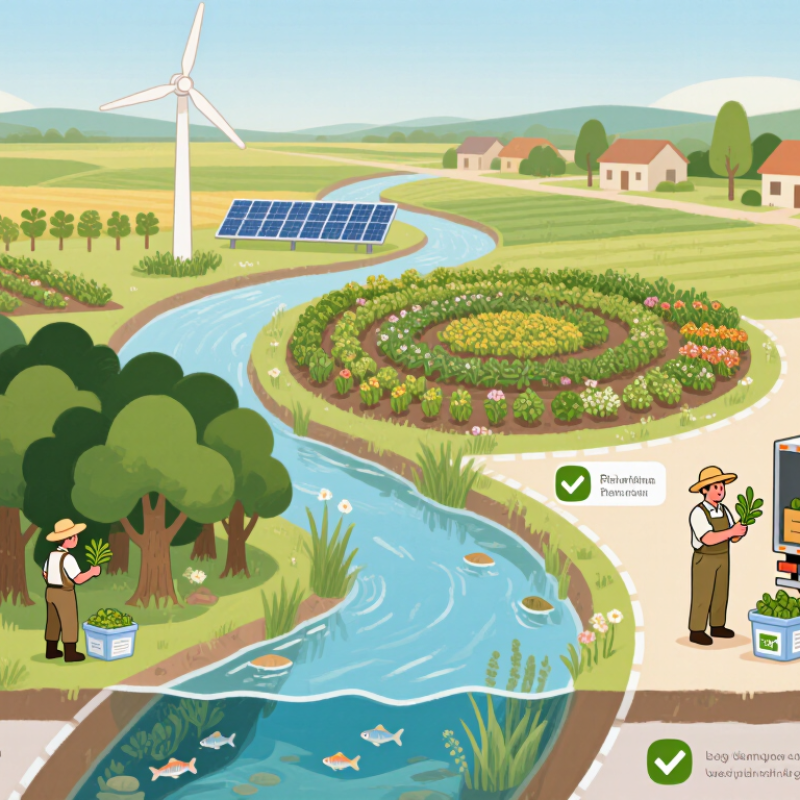
Sustainable supplement ingredients begin in the field, long before harvesting. Farming choices affect soil, water, and the wild species sharing that landscape. Rotating crops can reduce pressure on depleted soil and interrupt some pest cycles. Cover crops protect bare earth from heavy rain and help retain moisture. Small steps matter.

Biodiversity also depends on what farms leave in place. Hedgerows, flowering strips, and nearby native plants can provide food and shelter for pollinators and other wildlife. A farm growing one botanical across every field may be easier to manage, but it offers fewer habitats. Mixed plantings are not always practical, though, especially where harvest timing and quality standards are strict. That trade-off deserves honest attention.

For buyers, sustainability claims are more useful when they connect to verifiable practices. Ask whether growers monitor soil health, water use, and habitat over time, rather than relying on a single “eco-friendly” label. Field records, supplier audits, and clear sourcing information can help, but they do not make every impact visible. Nature varies by place and season. Even careful farms may struggle with drought, pests, or limited resources; improvement is often gradual, and the evidence should reflect that.

Top 10 Things That Make Supplement Ingredients Sustainable — Why Farming Methods and Biodiversity Matter

# Sustainability factor What responsible production can involve Useful indicators to assess Why it matters
1 Healthy, protected soil Using practices such as cover crops, returning suitable plant residues, and minimizing soil disturbance where appropriate to the crop and local conditions. Soil organic matter trends, erosion observations, ground cover, and soil testing results. Healthy soil supports crop growth, stores nutrients, and can reduce erosion. The most suitable practices vary by soil type and climate.
2 Crop rotation and diversity Alternating crops over time or growing compatible crops together instead of relying on a single crop year after year. Number and variety of crops in rotations; use of legumes or other crops suited to the farming system. Diverse rotations can interrupt some pest and disease cycles and help maintain soil fertility, though outcomes depend on crop choices and management.
3 Habitat for biodiversity Maintaining or restoring features such as hedgerows, field margins, native vegetation, and other suitable natural or semi-natural habitats. Area and condition of habitat; presence of native plants; observations of pollinators and other wildlife. Connected, well-managed habitats can provide food and shelter for wildlife, including pollinators and natural enemies of crop pests.
4 Integrated pest management Monitoring pests and using prevention and non-chemical controls where practical, with pesticides considered as part of a broader management approach. Pest-monitoring records, pesticide application records, and use of biological or cultural controls. Integrated pest management can reduce unnecessary pesticide use while supporting crop protection and reducing risks to non-target organisms.
5 Careful nutrient management Matching fertilizer and soil-amendment applications to crop needs, timing, and local conditions; using soil or plant tests when useful. Nutrient plans, application timing and rates, soil-test records, and signs of nutrient loss to water. Well-managed nutrients help crops grow while limiting avoidable runoff, leaching, and greenhouse-gas emissions associated with excess inputs.
6 Responsible water use Tracking water use and applying irrigation efficiently where irrigation is needed, while protecting local water sources and environmental flows. Water withdrawn per area or crop output, irrigation method, and monitoring of local water availability. Water-efficient management can reduce pressure on rivers and aquifers, especially in water-stressed regions. Local water context is essential to judging performance.
7 Protection of pollinators and beneficial species Providing suitable flowering resources and nesting habitat, and managing pesticide exposure and timing to reduce risks to beneficial insects. Habitat availability across seasons, pesticide risk-management records, and pollinator monitoring where appropriate. Pollinators support the reproduction of many wild plants and crops, while other beneficial species can contribute to natural pest control.
8 Responsible wild harvesting Harvesting wild plants only where collection is legal and ecologically appropriate, with limits and methods designed to allow populations to regenerate. Harvest locations and quantities, permits where required, population monitoring, and evidence of regeneration. Overharvesting can reduce wild populations and damage habitats. Harvest limits need to reflect the species and local ecosystem.
9 Climate- and location-appropriate farming Selecting suitable growing regions and varieties, and using locally appropriate practices to manage heat, rainfall variability, and other climate risks. Crop suitability information, weather and yield records, and documented soil- and water-conservation measures. Practices suited to local conditions can improve resilience and avoid shifting environmental pressures to another place or resource.
10 Traceability and continuous improvement Keeping records that connect ingredients to farms or collection areas and using monitoring results to improve environmental management over time. Documented origin, supplier and farm records, environmental assessments, and dated improvement actions. Traceability makes it easier to verify where ingredients come from and whether stated farming or harvesting practices are being followed.
Indicators are examples for comparing practices, not a guarantee of sustainability. Results depend on the crop, location, ecosystem, and how performance is measured over time.

How Processing, Packaging, and Transport Affect Environmental Impact

A supplement ingredient’s environmental impact does not end at the farm. Processing can use substantial heat, water, and electricity. For example, drying a delicate plant extract slowly may protect its quality, but it can also require more energy. Efficient equipment and renewable power can reduce that burden. Ask suppliers for specific information, such as energy use per batch, rather than relying on broad claims. Small details matter.

Packaging and transport also shape the footprint. A lightweight pouch usually needs less material to ship than a heavy container, but it must still protect the ingredient from moisture and light. Less packaging is not automatically better if products spoil and need replacing. Transport choices matter, too: air freight is generally more emissions-intensive than sea or road freight. Yet a distant source shipped by sea may compare differently with a nearby source processed inefficiently. The details can be messy.

Tips: Look for clear data on processing energy, packaging materials, and shipping methods. Prefer right-sized, protective packaging and well-planned shipments. Compare the full supply chain where possible; no single label tells the whole story. I still find these comparisons imperfect, because supplier data can use different boundaries.

How Traceability and Certifications Help Verify Sustainability

Traceability turns a sustainability claim into a checkable trail. For a botanical powder, that trail should connect the harvest location, collection date, processor, and finished ingredient lot. Buyers can compare these records with invoices, maps, and audit findings. Paper trails matter.

Certification can add independent checks, but its scope matters. A certificate may cover a farm, a processing site, or only a chain-of-custody model; these are not interchangeable. Ask whether the standard requires site audits, how often they occur, and whether certified material stays segregated or is recorded through mass balance. The last detail can be easy to miss.

The scale of the issue is visible in FAO’s 2024 State of World Fisheries and Aquaculture report: only 62.3% of assessed marine fishery stocks were biologically sustainable in 2021. For marine oils, lot-level origin records and credible fisheries certification help buyers check the source behind a label. CDP’s 2023 supply-chain report also recorded suppliers reporting 1.8 billion tonnes of emissions reductions, showing why measured disclosures matter alongside certificates. Still, a verified document is not proof of perfect practice. Data can be incomplete, and audits capture a moment in time. Ask for dated records and follow up when evidence does not match the claim.

FAQS

How can crop rotation support soil health?

Rotating crops can ease pressure on depleted soil and interrupt some pest cycles. Cover crops protect bare earth during heavy rain.

How do hedgerows and flowering strips help wildlife?

They can provide food and shelter for pollinators and other wildlife. Small habitat patches matter.

Are mixed plantings always practical?

No. Harvest timing and strict quality standards can make mixed plantings difficult. That trade-off deserves honest attention.

What sustainability details should buyers request?

Ask for records on soil health, water use, and habitat over time. A single “eco-friendly” label is not enough.

Can careful farms avoid environmental problems?

Not always. Drought, pests, and limited resources can still create difficulties. Improvements are gradual, and some impacts remain hard to see.

How can processing affect an ingredient’s footprint?

Processing can use heat, water, and electricity. Slow drying may protect a delicate extract, but it can require more energy.

Is less packaging always better?

Not necessarily. A lightweight pouch uses less shipping material than a heavy container, but it must still protect ingredients from moisture and light. Spoilage means replacement.

Which shipping methods generally use more emissions?

Air freight is generally more emissions-intensive than sea or road freight. The comparison can change when processing is inefficient.

Why compare full supply-chain data?

Energy use per batch, packaging materials, and shipping methods reveal useful details. Supplier data may use different boundaries, so comparisons remain imperfect.

Conclusion

What makes a dietary supplement ingredient sustainable is not just where it comes from, but how it is sourced, grown, processed, packaged, and transported. Responsible sourcing helps reduce pressure on wild ecosystems while supporting the people and communities involved in producing raw materials. Farming methods also matter: practices that protect soil, conserve water, and encourage biodiversity can help maintain healthy landscapes and reliable ingredient supplies over time.

Sustainability continues throughout the supply chain. Efficient processing, thoughtful packaging, and shorter or better-planned transportation can reduce waste and environmental impact. Traceability allows ingredients to be followed from their origins through production, while credible certifications can offer additional evidence that sourcing and manufacturing practices meet defined standards. Together, these considerations provide a practical way to assess an ingredient’s overall sustainability rather than judging it by a single claim.

Ethan

Ethan

Ethan is a seasoned marketing professional with a deep expertise in our company's innovative product line. With a passion for sharing knowledge and insights, he takes the lead in regularly updating our corporate blog, where he explores industry trends, product features, and effective marketing......