Choosing sports nutrition ingredients in China requires more than comparing prices. The right decision connects formulation goals, consumer safety, supplier capability, and market compliance. This guide explores how to choose ingredients for sports nutrition products with practical sourcing discipline. A protein powder may look consistent in a sample bag, yet dissolve poorly in a shaker. A sweetener may taste clean at first, then leave an unpleasant aftertaste. Small details matter.
Experienced buyers examine identity, purity, allergens, contaminants, stability, and traceability before approving a material. They request current certificates of analysis, specification sheets, testing methods, and representative samples. Independent laboratory verification can confirm key results, especially for botanicals, minerals, amino acids, and protein ingredients. Supplier audits also reveal storage conditions, hygiene practices, batch controls, and corrective-action records. A polished factory tour is useful, but documentation matters more. Some suppliers communicate well but struggle with consistent production. That gap deserves attention.
China offers broad manufacturing expertise, but quality varies by ingredient and facility. Qualified nutritionists, quality managers, and regulatory specialists should review the final formula for each destination market. Claims require evidence, and labels must match the tested composition. No checklist is perfect. Taste trials can miss long-term stability, while laboratory data cannot predict every consumer preference. Careful buyers combine both. They compare several batches, record decisions, and leave room to question attractive offers. Reliable sourcing is not the cheapest purchase; it is a controlled process that protects performance, credibility, and consumer trust.
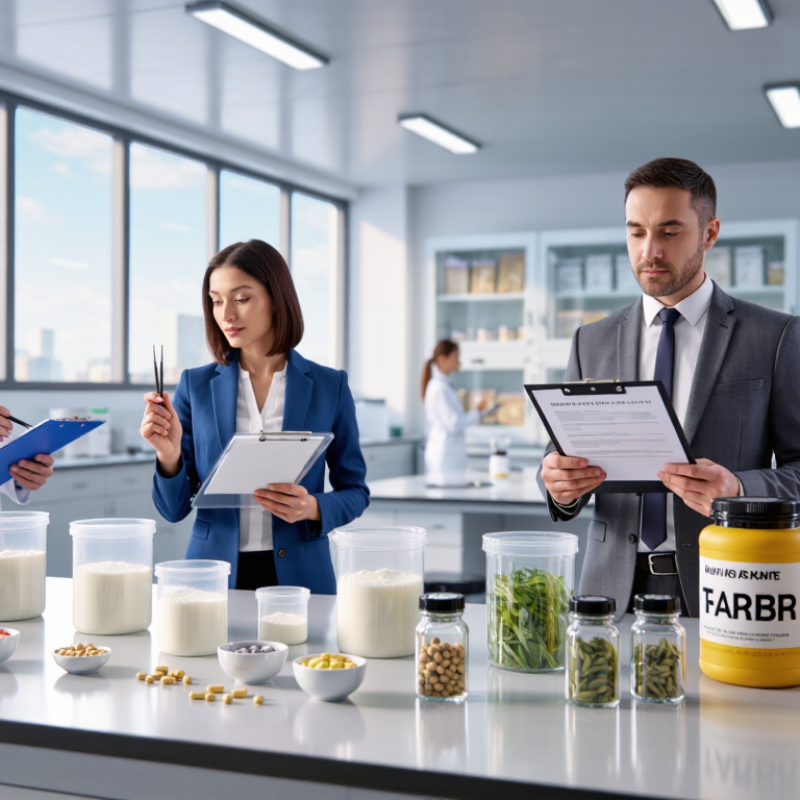
Sports nutrition ingredients are functional compounds used to support energy, hydration, recovery, or adaptation to training. They are not automatically “better” because a label sounds scientific. A useful ingredient must match a clear physiological need.
Carbohydrates supply fast exercise fuel, especially during long sessions. Electrolytes help replace minerals lost through sweat, although requirements vary widely. Protein ingredients provide amino acids for muscle repair. The International Society of Sports Nutrition recommends about 1.4–2.0 grams of protein per kilogram of body weight daily for most exercising individuals. More is not always more. Excess protein cannot replace adequate training or sleep.
Caffeine may improve alertness and endurance for some adults, but dosage, timing, and sensitivity require careful control. Creatine supports repeated high-intensity efforts and has substantial evidence behind it. The International Olympic Committee’s consensus report emphasizes individualized nutrition, tested ingredients, and professional oversight. Industry demand is also expanding: Grand View Research reported continued global sports nutrition market growth, with Asia-Pacific among the fastest-growing regions in recent forecasts. In China, ingredient selection should consider local formulation standards, supply-chain testing, heavy-metal screening, and accurate labeling. A practical mistake is choosing ingredients from trends alone. A better process examines purity certificates, clinical evidence, athlete needs, and the finished product’s stability. Evidence can still be incomplete. That deserves honesty.
Choosing sports nutrition ingredients in China requires more than comparing protein content or price. Quality begins with a clear specification, including purity, moisture, particle size, allergens, and permitted use. Request a batch-specific certificate of analysis, not a generic file. Check heavy metals, microorganisms, pesticides, and residual solvents through qualified laboratory testing. A bright powder and smooth texture prove very little.
Safety also depends on handling. Review the supplier’s manufacturing controls, sanitation records, traceability system, and storage conditions. A sealed sample may look perfect, while poor warehouse humidity damages the next shipment. Confirm the production date, batch number, shelf life, and transport temperature. Independent testing is valuable, but it should support, not replace, supplier audits. This is where many buyers move too quickly.
Regulatory compliance needs careful interpretation. Confirm whether the ingredient is approved for food use in China, whether it falls under a specific standard, and whether novel food or additive requirements apply. Check permitted dosage, labeling language, allergen declarations, and advertising claims before commercial use. Documents should match the actual factory and batch. They should also be translated accurately. Rules and interpretations can change, so an old approval file may not remain sufficient. A practical review should involve qualified regulatory professionals and leave a clear record of every decision. Mistakes happen, especially when technical and legal teams work separately.
Choosing sports nutrition ingredients in China requires more than comparing quotations. A supplier should explain raw material sources, batch controls, and testing schedules. Ask for current COAs, allergen statements, and traceability records. Do not accept one attractive laboratory report as proof of every batch. During an audit, check whether sample labels match warehouse cartons. Review production records, sanitation logs, and complaint handling. ISO 22000 or HACCP can support confidence, but certificates need verification and current scope.
Manufacturing standards reveal how reliably an ingredient moves from factory to finished product. Look for controlled weighing rooms, calibrated instruments, documented cleaning, and separated allergen areas. Independent testing should cover identity, purity, microbiology, and relevant contaminants. For botanical or mineral ingredients, request test methods and limits, not only pass-or-fail results. A supplier may answer quickly, yet vague answers deserve a second review. Compliance paperwork helps, but it cannot replace a site visit or video audit.
Product form changes both performance and cost. Powders suit tubs and stick packs, but moisture can cause clumping. Capsules offer convenient dosing but require flow and fill-weight control. Gummies need stable texture, flavor, and heat management. Ready-to-mix liquids demand stronger microbial controls and careful packaging. Ask for pilot samples, dissolution tests, shelf-life data, and packaging compatibility. I would compare equal serving sizes, not price per kilogram. That comparison is easy to miss. A supplier admitting a limitation may be more dependable than one promising everything.
This practical evaluation framework gives the highest priority to traceability, food-safety systems, and laboratory evidence when comparing sports nutrition ingredient suppliers in China. Product form and packaging should then be matched to the intended application, shelf-life target, dosage, and manufacturing process.
Choosing sports nutrition ingredients in China requires more than a promising laboratory result. In product testing, I would check dosage, solubility, taste, and stability under humid warehouse conditions. The International Society of Sports Nutrition reports that creatine monohydrate has strong evidence for repeated high-intensity performance. Its position stand also identifies 3–6 mg of caffeine per kilogram as an effective range, although individual tolerance varies. More is not automatically better.
Evidence must meet the user’s real training needs.
A recreational runner may value carbohydrate digestion and mild flavor, while a strength athlete may prioritize creatine and protein quality. China’s 2023 Dietary Guidelines emphasize balanced food intake, so an ingredient should support the diet, not replace it. My first screening mistake was choosing a technically impressive extract without checking its permitted food use and testing cost. The specification looked excellent. The final formula did not.
Cost includes more than the quoted price per kilogram. Import duties, minimum order quantities, third-party testing, and local storage can change the calculation. Mordor Intelligence’s 2024 market analysis expects China’s sports nutrition sector to expand steadily through the decade, but growth does not guarantee product-market fit. Consumer research from Mintel indicates that Chinese shoppers increasingly examine function, safety, and ingredient transparency. Clear certificates, traceable batches, and realistic claims therefore matter. Some assumptions still need local validation. A small pilot test can reveal whether athletes actually repurchase the product.
Choosing sports nutrition ingredients in China requires more than comparing quotations. Ingredient identity, purity, traceability, and intended use must be verified together. Grand View Research valued the global sports nutrition market at about USD 45.27 billion in 2023, increasing pressure on suppliers to prove quality. Ask for a current certificate of analysis, manufacturing address, batch number, allergen statement, and heavy-metal results. Confirm whether testing was performed by an independent laboratory. A polished document is not proof.
I recommend requesting representative samples from at least two production batches. Compare colour, odour, solubility, and analytical results. For protein ingredients, check amino-acid composition and protein content, not only nitrogen values. The International Society of Sports Nutrition states that most exercising adults may need 1.4–2.0 grams of protein per kilogram daily, but product claims must match local requirements. In China, review applicable GB standards and registration or filing obligations before making label decisions. Regulations change. I have seen technically strong samples fail because documentation was incomplete.
Tips: Use a risk-based checklist. Verify the supplier’s quality system through an audit or video inspection. Request tests for microorganisms, adulteration markers, and contaminants relevant to the ingredient. Keep sealed reference samples and record every batch decision. Do not rely on one report. A second test can expose an uncomfortable mistake.
| Ingredient Category | Typical Product Application | Common Commercial Form | Useful Quality Benchmark | Recommended Verification Tests | Key Documents to Request | China-Specific Compliance Check |
|---|---|---|---|---|---|---|
| Whey Protein | Protein powders, ready-to-mix beverages, bars and recovery formulas | Whey protein concentrate, whey protein isolate and hydrolyzed whey protein | Protein content should match the declared grade; whey protein isolate is commonly specified at 90% or more protein on a dry basis. | Protein assay, moisture, amino-acid profile, microbiological testing, heavy metals, antibiotics screening and melamine testing where relevant | Certificate of Analysis, specification sheet, allergen statement, non-GMO statement, country-of-origin information and batch traceability records | Confirm permitted food use, Chinese labeling requirements, allergen declaration and whether the intended product category requires additional registration or filing |
| Creatine Monohydrate | Strength, power and high-intensity exercise products | Fine powder or micronized powder | A high-purity material is typically targeted at approximately 99.9%; the exact acceptance limit should be defined in the purchase specification | Identity testing, assay, creatinine and related impurities, loss on drying, particle-size distribution, microbiological testing and heavy metals | Batch-specific Certificate of Analysis, manufacturing specification, stability information and residual-solvent statement | Verify the ingredient's current permitted use and maximum-use requirements for the specific Chinese food category before formulation |
| Caffeine | Pre-workout powders, energy products and performance beverages | Anhydrous powder or standardized botanical extract | Use a defined assay range and control total caffeine per serving; the formula should account for caffeine from all sources | HPLC assay, identity, related alkaloids, residual solvents, pesticides for botanical sources, microbiology and heavy metals | Certificate of Analysis, botanical source statement, allergen statement, pesticide report and safety or toxicology documentation | Check Chinese requirements for caffeine-containing foods, required warnings, serving-size controls and labeling of total caffeine content |
| Beta-Alanine | Pre-workout and high-intensity training formulas | Crystalline powder | High-purity products are commonly specified at approximately 99%; sensory quality and particle size may also affect finished-product performance | Identity, assay, related substances, moisture, particle size, microbiology and heavy metals | Batch Certificate of Analysis, specification sheet, stability data and manufacturing-process summary | Confirm current Chinese food-use status, permitted dosage conditions and whether product claims are supported for the selected product category |
| L-Citrulline | Pre-workout, endurance and blood-flow support products | Pure L-citrulline powder or citrulline malate blend | Distinguish clearly between pure L-citrulline and citrulline malate; blends may be sold in ratios such as 1:1 or 2:1, which should be verified analytically | HPLC identity and assay, malic-acid ratio where applicable, moisture, microbiology, heavy metals and adulteration screening | Certificate of Analysis, ratio declaration, raw-material origin, stability data and non-irradiation statement where required | Review permitted food use, product classification, dosage, labeling and the acceptability of performance-related claims in China |
| Branched-Chain Amino Acids | Drink powders, amino-acid blends and recovery formulas | Free-form L-leucine, L-isoleucine and L-valine powders | Verify the declared ratio, such as 2:1:1, and confirm that the ratio refers to actual amino-acid content rather than total blend weight | Amino-acid profile, identity, assay, moisture, optical rotation, microbiology and heavy metals | Batch Certificate of Analysis, amino-acid origin statement, allergen information and traceability documentation | Confirm ingredient authorization, permitted use level, Chinese nutrition labeling rules and suitability for the intended food category |
| Carbohydrates | Energy gels, sports drinks, recovery powders and carbohydrate bars | Maltodextrin, dextrose, glucose syrup solids, fructose or multi-carbohydrate blends | Control carbohydrate assay, moisture and dextrose equivalent where relevant; blended products should specify the percentage of each carbohydrate source | Carbohydrate profile, moisture, ash, acidity or pH where relevant, microbiology, heavy metals and pesticide testing for plant-derived materials | Specification sheet, Certificate of Analysis, allergen statement, origin information and stability or shelf-life data | Check nutrition-label calculation, permitted claims, sugar declaration and requirements for products intended for athletes or general consumers |
| Electrolytes | Hydration powders, isotonic drinks and endurance products | Sodium, potassium, magnesium and calcium salts | Control elemental-mineral content rather than only the salt weight; calculate sodium, potassium, magnesium and calcium per serving | Mineral assay by ICP-OES or ICP-MS, identity, moisture, insoluble matter, microbiology and heavy metals | Elemental-content calculation, Certificate of Analysis, specification sheet and contaminant-control statement | Confirm nutrition-label accuracy, permitted mineral sources, serving-size limits and product-specific requirements for hydration claims |
| Omega-3 Fatty Acids | Softgels, powdered oils, nutrition bars and recovery products | Fish oil, algae oil or encapsulated EPA/DHA powder | Specify EPA and DHA separately; oxidation quality should be controlled using peroxide value, anisidine value and total oxidation indicators | EPA/DHA profile by GC, peroxide value, p-anisidine value, total oxidation, dioxins and PCBs, heavy metals and microbiology | Batch Certificate of Analysis, sustainability or origin statement, allergen declaration and oxidation-stability data | Verify source-specific labeling, Chinese food-use requirements, allergen labeling and acceptable claims for the selected product category |
| Botanical Extracts | Pre-workout, endurance, recovery and weight-management formulas | Standardized powders, dry extracts or concentrated botanical fractions | Define the botanical species, plant part, extraction ratio and marker-compound range; avoid specifications based only on extract ratio | Botanical identity by microscopy or DNA where appropriate, marker-compound assay, pesticide residues, heavy metals, solvent residues, microbiology and adulteration screening | Full botanical name, plant-part statement, extraction solvent, Certificate of Analysis, pesticide report and origin traceability | Confirm the botanical's permitted food status in China, applicable food or health-food rules, maximum use level and restrictions on functional claims |
| Sweeteners and Flavor Systems | Powders, ready-to-drink beverages, gels and chewable sports products | High-intensity sweeteners, polyols, natural flavors and flavor preparations | Match sensory performance, solubility and stability to the formula; calculate polyol and sweetener contribution to the nutrition panel | Identity and assay, residual solvents where applicable, microbiology, heavy metals, allergen screening and sensory evaluation | Ingredient specification, flavor declaration, allergen statement, regulatory status and shelf-life information | Check permitted sweeteners and flavoring substances, use limits, Chinese ingredient naming and mandatory labeling requirements |
They support energy, hydration, recovery, or training adaptation. A useful ingredient must match a real physiological need. A scientific-sounding label proves little.
Many exercising adults need about 1.4–2.0 grams per kilogram daily. More protein is not automatically better. Training and sleep still matter.
Carbohydrates provide quick fuel during longer training sessions. Electrolytes replace minerals lost through sweat. Needs vary between people, climates, and workout durations.
Caffeine may support alertness and endurance for some adults. Dose, timing, and personal sensitivity require careful control. Creatine can support repeated, high-intensity efforts. Individual advice is still wise.
Request a batch-specific certificate of analysis. Review purity, moisture, allergens, particle size, and permitted use. Testing should include heavy metals, microbes, pesticides, and residual solvents. One bright powder means little.
Check production dates, batch numbers, shelf life, and transport temperatures. Humidity can damage a later shipment, even when a sealed sample looks perfect. Review sanitation, traceability, and warehouse controls. Storage is easy to underestimate.
Confirm food-use approval and applicable standards in the target market. Check dosage limits, labeling language, allergens, and advertising claims. Documents must match the actual factory and batch. Old files may no longer be enough.
Compare testing schedules, raw-material sources, batch controls, and traceability records. Verify certificates and their current scope. Powders may clump from moisture. Capsules need accurate filling. Gummies require texture and heat control. Liquids need stronger microbial protection.
Request pilot samples, dissolution tests, shelf-life data, and packaging checks. Compare equal serving sizes, not only kilogram prices. A site visit or video audit can reveal missing controls. Some uncertainty remains. That deserves honesty.
Choosing the right ingredients is essential for developing safe, effective, and marketable sports nutrition products in China. This process begins with understanding the roles of proteins, amino acids, carbohydrates, electrolytes, vitamins, minerals, and other functional ingredients in supporting energy, recovery, hydration, and performance. To determine how to choose ingredients for sports nutrition products, manufacturers should evaluate ingredient identity, purity, dosage, stability, potential contaminants, and compliance with applicable food and health regulations. Clear documentation, traceability, testing reports, and responsible production practices are also important for ensuring consistent quality and consumer safety.
A thorough supplier comparison should consider manufacturing standards, technical support, production capacity, delivery reliability, and available product forms such as powders, capsules, tablets, or ready-to-mix formats. Each ingredient should be assessed according to scientific evidence, expected benefits, cost, formulation compatibility, target users, and market demand. Before final selection, product developers should verify specifications through independent testing, sample evaluation, and small-scale trials. A systematic approach helps create products that are practical, transparent, compliant, and aligned with consumer expectations.

Soy Extracts