Soy Extracts
1 / 5

| Product Specification Sheet | |
|---|---|
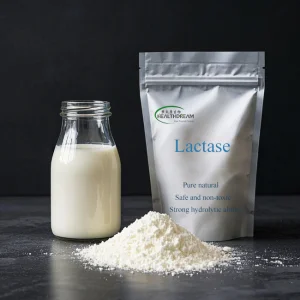
| Product: | Lactase |
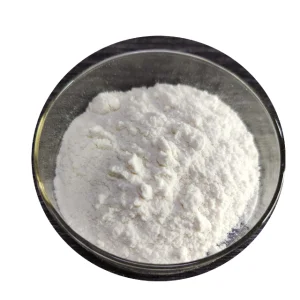
| Appearance: | White to off white powder |
| Odor: | Slightly sweet to sweet or slightly salty taste |
| Source: | Aspergillus oryzae |
| Lactase activity: | 10,000 ALU/g or customized |
| Synonym: | Beta Galactosidase |
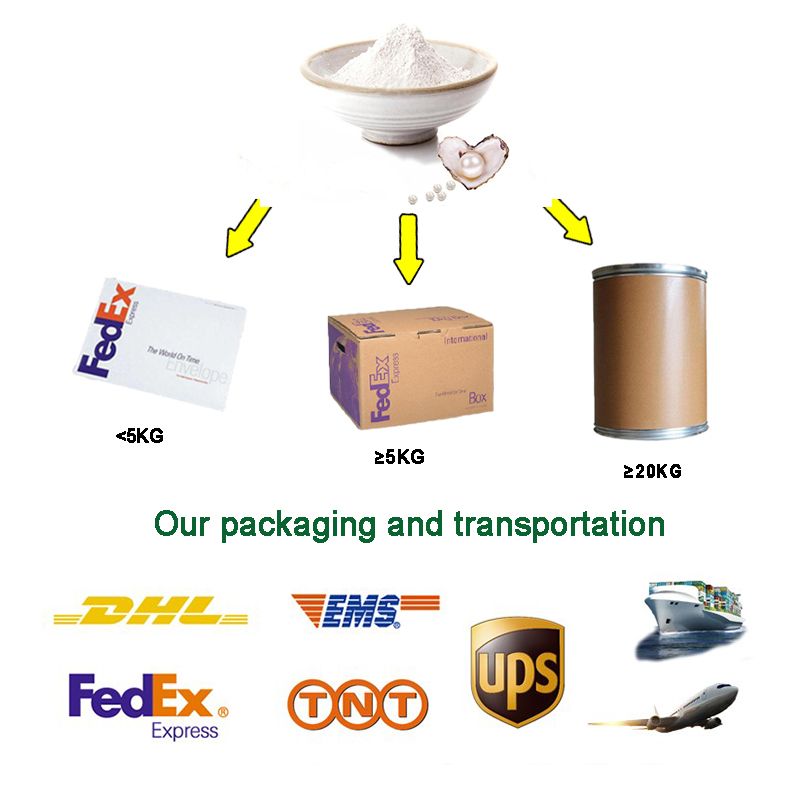
| Package: | 20 kg/drum |
| Shelf life: | 24 months when stored properly |
| Suitable condition: | 45℃ ~ 55℃; pH 3.0 ~ 5.5 |
| Other influence: | Oxidation inhibitor; Reducing substances, like active ion Ca2+, Mg2+, Na+, K+ etc. |
| Storage: | Store in cool and dry place protected from light |

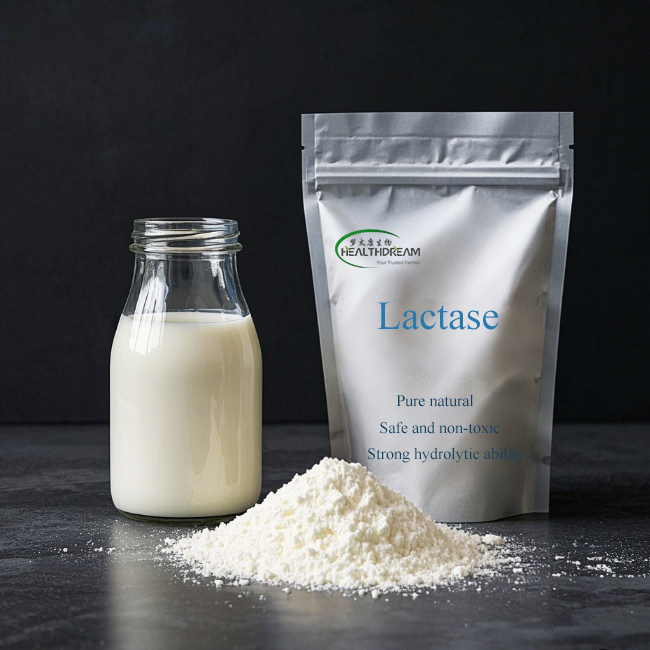
Lactase is derived from Aspergillus oryzae. Lactase, also known as beta Galactosidase, is an odorless and safe biological enzyme preparation. It can catalyze the hydrolysis of β-1, 4 galactoside bond, converting lactose into glucose and galactose. It can also transfer galactoside to produce galactose oligosaccharide, greatly reducing the content of lactose.


1. Enzyme preparations are proteins. Consuming foods containing enzyme preparations is generally safe and beneficial to the human body, similar to consuming other protein-rich foods.
2. Direct contact with highly concentrated enzyme dust or droplets may cause allergies in sensitive individuals. Prolonged exposure can irritate the skin, eyes, and mucous membranes. Operators should wear protective equipment such as masks and safety glasses. Spills should be cleaned promptly—vacuumed or washed down with water.
1. Enzymes are bio-active substances sensitive to heavy metal ions (Fe3+, Cu2+, Hg+, Pb+, etc.) and oxidants. Avoid contact with these substances during processing and storage.
2. Unfavorable storage conditions or excessive storage times can lead to loss of enzymatic activity. If stored under high temperature or humidity, adjust dosage levels accordingly.
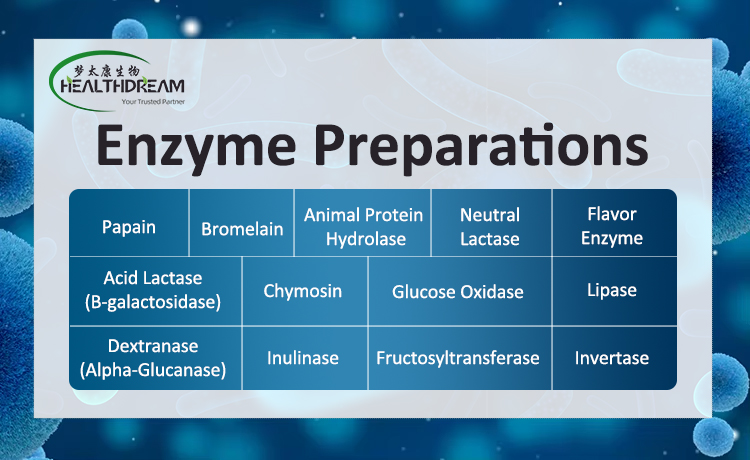
| Name | Specification | Application |
|---|---|---|
| Papain | 6,000 ~ 60,000 U/mg | Digestion and Protein Hydrolysate |
| Bromelain | 1000 ~ 3000 GDU/g | Digestion and Diminish Inflammation |
| Neutral Protease | 200,000 ~ 400,000 U/g | Protein Hydrolysate and Biscuit |
| Alkaline Protease | 100,000 ~ 1,500,000 HUT/g | Protein Hydrolysate and Detergent |
| Acid Protease | 450 ~ 3,000 SAPU/g | Protein Hydrolysate and Feed |
| Transglutaminase | 100 ~ 3,000 U/g | Protein Reforming & cross-link |
| Lactase | 10,000 ~ 170,000 ALU/g | Lactose Digestion and Dairy |
| Lipase | 5,000 ~ 100,000 FIP/g | Bakery, Fat Digestion and Medicine |
| Amylase | 10,000 ~ 100,000 DU/g | Starch Digestion and Starch sugar |
| Gluco-amylase | 100 ~ 2,300 AGU/g | Starch Sugar and Brewing |
| Fungal amylase | 30,000 ~ 150,000 SKB | Bakery and Starch digestion |
| Lysozyme | 45,000 FIP U/mg | Preservation and Functional Food |
| Flavor enzyme | 40,000 U/g | Remove the bitterness |
| Nuclease | 7,000 U/g ~ 50,000 U/g | RNA Hydrolysis and Yeast Extract |
| Deaminase | 20,000 U/g | High I+G Yeast Extract |
| Yeast Extract Enzyme | Composite Enzyme | Yeast Extract |
| Cellulase | 20,000 ~ 100,000 CU/g | Digestion and Juice |
| Pectinase | 30,000 ~ 100,000 U/g | Digestion and Juice Beverage |
| Meat Tenderizer | Composite Enzyme | Meat tenderizing |
| Dextranase | 10,000 ~ 200,000 DU/g | Hydrolyzed α-1,6-glucoside linkages of dextran molecule |